Showing posts with label kriegsmarine. Show all posts

Monday, August 25, 2008

Germany Storms Ashore!


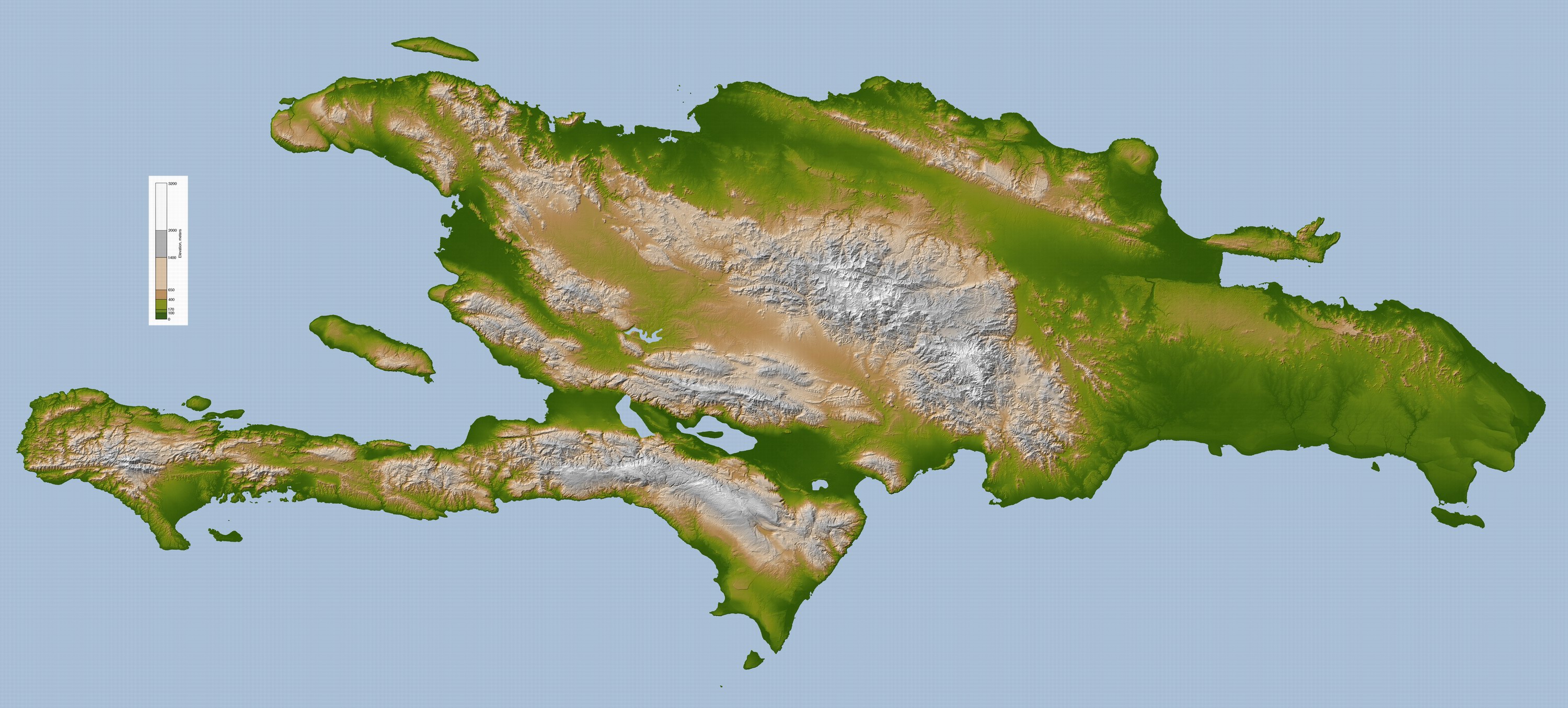
25 August 1980 - The Germanic Union invaded the island of Hispaniola today amid claims that both the Dominican Republic and Haiti had failed to prevent continued illegal immigration of their citizens into Reich territories. Following a barrage from the Luftwaffe and Kriegsmarine, ground forces landed in the Dominican Republic and Haiti. Storming ashore, resistance rapidly crumbled in the wake of the world’s most powerful military. The fall of this island places the whole of the Caribbean in German hands.

Analysts give varied reasons as to Germany’s actions. Some point to the sluggish economy with claims that Krause is using this successful campaign to draw attention away from their faltering business sector. Second and most importantly, there are the heightened voices of fanatics within the Party demanding a renewed crusade to wipe out all untermensch beyond their borders. With the growing populations of non-whites surging, especially in Asia, there are fears that Germany will be swallowed by the hordes. Despite calls to invade China, a major source of imports, or Southeast Asia, an area where the Wermacht would have been bogged down, Krause settled on the easiest option.

SOURCE: Los Angeles Times

Tuesday, April 22, 2008

April 1944 - June 1944

Hitler's order to secure the industrial core of America recommenced in the spring of 1944 when Rommel drove into Ohio reaching Youngstown April 10. American forces, largely National Guard units, offered little resistance as he struck northwest towards Cleveland, taking the city on April 17, before then striking south for Akron.

Guderian's drive into Indiana was just as rapid, Elkhart falling April 13, followed by Ft. Wayne on April 19. The first signs of organized American forces appeared as he approached Muncie, April 25. The VI Corps, under Major General Ernest J. Dawley, had moved east from Illinois in late March, taking up position north of Indianapolis on April 17. When news came of Guderian's march south, Dawley prepared his forces to meet him. It was patrols of the 45th Division which first encountered Wermacht troops outside Muncie on April 25. Brief gunfire was exchanged before American forces withdrew to report German troop movements.

German and American forces would skirmish over the next three days in and around Delaware County with Guderian forcing Dawley gradually southwestward. The fourth day of fighting transpired near the White River, five miles from Yorktown. The river to his rear, Dawley found himself trapped. With a lack of decent armor, only VI Corps' artillery served to deter German charges meant to drive them into the river. This was quickly solved by Guderian's panzers which sliced through the VI's infantry and overran Dawley's main guns. Suffering heavy casualties, many American soldiers dove into the White River swimming across to the southern shore while being shot at by Wermacht rifles and panzer cannons. Scores of bodies would foul the water for weeks to come, some washing up as far as ten miles downriver.

Rommel, meanwhile, had picked up his breathtaking pace reaching Marietta, OH on April 28. There he met parts of the reconstituted II Corps, now commanded by Major General Geoffrey Keyes.

Patton, the former commander of II Corps, had been "promoted" to an inactive front, commander of III Corps at the Presidio in Monterey, CA, due to his controversial dealings with his superiors and subordinates. The press had printed some of Patton's abusive correspondence with Washington greatly angering President Dewey who wouldn't bear his authority being undermined. Dewey was sure Patton had leaked the correspondence as a way to guilt him into action on a list of complaints the general had earlier sent him. To make matters worse was Patton's slapping of a soldier suffering from shell shock following the Battle of Pittsburgh. Patton's abrasive personality drove Eisenhower to move the man as far away as possible for his own good.

Major General Keyes proved an able leader though not as skilled as Rommel who rapidly punctured the American line and rolled up part of II Corps by April 30. Only Keyes deft maneuvering kept the entire II Corps from being enveloped. Part of the reason for this defeat was attributed to II Corps' armor which stood at 65%, manned largely with inexperienced tank crews that had been rushed to the front. Among these tanks was the M5 which saw its first frontline action, performing well under fire but still inadequate against German Panthers.

The Battle of Marietta would end American support for light tanks and lead to the development of medium and heavy tanks. Rommel would complete the annihilation of II Corps over the next four days leaving only 80,000 American troops between him and Washington to the east, but the German commander turned west to link up with Guderian as ordered despite a desire to gamble for the American capital.

In Indiana, Indianapolis was encircled by Guderian April 28 and taken two days later severing a vital transportation hub in a largely bloodless offensive. Guderian would then turn southeast cutting a swath through disorganized American forces, put together piecemeal from whatever was available, on his way to the Ohio border.

Rommel and Guderian would meet in Cincinnati on May 14. Though this served as a major blow to the United States, it was only the beginning of a larger offensive.

Hitler had decided to open a second front in September 1943 following the beating Rommel had taken in Pennsylvania to relieve the pressure on German forces in New England and to put renewed pressure on the American capital. The Fuhrer looked towards a landing somewhere along the Carolina coast. Goering and Raeder would aid Hitler in his planning. What the pair offered up most were doubts.

Goering informed the Fuhrer that landings anywhere south of Virginia would be unsupported by Luftwaffe aircraft, the distance being too great from their airfields in New Jersey and Pennsylvania. Raeder further warned Hitler that should the Carolina landings be successful, there was the possibility that the United States could blockade the coast using parts of the Atlantic and Pacific fleets cutting off the landing force from resupply. Up to this point, the United States had been willing to not call on the Pacific Fleet to augment their Atlantic naval forces, but the German offensive in the south could be viewed as a large enough threat to redeploy parts of the Pacific Fleet to the Atlantic, especially due to the lull that had settled over the west coast. Then there was the problem of landing and amphibious craft which were in short supply. There would need to be designs drawn up, raw materials allocated, workers found, etc. This didn't include the training necessary to prepare troops for the operation. The entire venture was not likely to happen in less than two years at best and even then it was still fraught with a myriad of threats of failure.

But Hitler would not be swayed. The very audacity of the plan, coupled with the fact that it would be the largest amphibious assault in history, mesmerized the German leader. When Raeder and Goering realized the futility of halting preparations, they tried to convince the Fuhrer to move the landing point further north to allow for air support. Hitler would not hear of it. First, the threat of American air forces would be minimal in the Carolinas. Naval reconnaissance had found only four to five squadrons scattered across the area, mostly used for training and coastal patrols. The Fuhrer was quick to point out to Raeder the fact that recent modifications to five merchant ships would provide the Kriegsmarine with additional escort carriers whose fighter complement added up to 30 Bf 109s. Added to the Graf Zeppelin's aircraft, that numbered 40 fighters placing the American to German fighter ratio at roughly around 2:1. German aircraft had proven its supremacy time and again and American air forces would be disorganized coming from several air fields and could, likely, be intercepted before they became a problem. Second, landing anywhere in Virginia was ridiculous with the American troop presence so close to Washington. The invasion force would quickly find itself bogged down by soldiers already on alert and then pushed back into the sea. An attack further south would face minimal opposition allowing for an easier push inland and would also serve to draw off forces opening Washington to the joint forces of Rommel and Guderian leading to the fall of the capital and the end of the United States as a coherent entity.

"American forces are broken," Hitler stated. "All it will take is one more bold stroke to shatter their resolve. Our forces will walk over them to everlasting victory!"

As to the problems of landing craft, Hitler ordered German forces to begin confiscating all merchant and commerical craft in the occupied areas of Canada and New England. They had until summer 1944. Speed and surprise was essential.

The initial phase of the operation, the combined Luftwaffe/Kriegsmarine assault on Newport News in November 1943, served to drive the Atlantic Fleet south. It would be followed by numerous sorties to keep the Atlantic Fleet away from the proposed landing zones and to allow for aerial reconnaissance of the region. With naval success on the American east coast, Hitler ordered plans for an amphibious landing at Charleston to be sped up. He would travel to Philadelphia to set up his American HQ to oversee the Atlantic Theater, coordinating with Rommel, Guderian, Manstein, Goering, and Raeder. Training for the landing was conducted throughout late winter/early spring.
30 May 1944, Raeder initiated the invasion heading south from New Jersey. American forces would be ill-equipped to counter the coming attack, lacking in men and materiel. The American General Staff had become used to Raeder's roaming up and down the east coast over the past year in what was perceived as a useless blockade. Any threat the German Admiral offered, such as shelling of coastal ports, had been kept at bay by coastal aircraft which had markedly increased in northern Virginia. Also, after having overreacted to the joint Luftwaffe and Kriegsmarine attack on Newport News, and with Rommel and Guderian to their west, American commanders were not willing to divert troops to the Carolina shores. In fact, they had diverted troops north to defend against a renewed drive by the Wermacht on Washington. The American Midwest and Washington took priority. Thus, South Carolina was not prepared for the German forces that stormed her shores, having been stripped of a vast amount of divisional strength and mostly used as a training area.
The Battle of Charleston began at 0300, June 6, with a naval barrage accompanied by bombing runs by the Graf Zeppelin's Ju-87s which would render the air strips at Myrtle Beach and Charleston Army Air Fields useless, grounding their squadrons and stripping air supremacy from American forces.
121,000 Wermacht troops ran ashore over the next five hours starting at 0630 in a motley collection of cruise ships, steamers, and other craft overwhelming limited American resistance in what quickly became a debacle for the American High Command. By the time USAAF air support could be called from nearby air fields in Florence and Charlotte, German troops had secured their beachheads and were driving inland. When USAAF forces arrived on the scene, what they found was mass panic. Numerous civilians clogged the roads trying to escape the German drive. What they did not know was that aircraft from the Graf Zeppelin and her escort carriers had been strafing and bombing American civilians in their exodus causing mass panic.

The German invasion of Charleston was only part of the Operation. Following the success of their spring campaign, Rommel and Guderian used the bulk of their forces to stab into West Virginia in a drive aimed at Washington itself meant to divert troops and attention away from South Carolina prior to the amphibious landings. This drive commenced in mid-May and reached as far as Moorefield, WV by June 6. Surprised by the ease of their eastward assault, Rommel and Guderian decided to press further than planned. The first line of defenses surrounding Washington would be shattered three days later.

Washington was in a panic. They had no immediate forces to counter the invasion in South Carolina, Rommel was less than thirty miles away, and the threat of losing the entire east coast was fast becoming a reality. Many voiced the opinion that Washington should be abandoned so that American forces could then focus on crushing the German forces at Charleston while maintaining a coherent defense against German forces from the north. President Dewey refused to abandon the capital citing its symbolic nature. Instead, he ordered that all forces in Virginia be focused on defending the capital while the fleet was to solve the problem in Carolina. Parts of the Pacific Fleet would be diverted east in the weeks to come while the bulk of the Atlantic Fleet was told to move north and engage the Kriegsmarine.

Admiral King issued the command for the Atlantic Fleet to remove the Kriegsmarine from the Carolina coast that the Wermacht in Charleston could be cut off and captured by I Corps. The decisive battle of the Atlantic unfolded June 12 between the Atlantic Fleet and the Kriegsmarine. Raeder was ordered by Hitler himself to hold his position at all costs. Raeder's naval aviators held the sky against American aircraft. The majority of the USAAF pilots were still trainees and quickly overwhelmed by the German aces who tore them apart. The two navies pounded one another across the sea taking numerous casualties. While Ju 87s and Fi 167s rained fire from above, Uboats attacked from the depths. Le Malin class destroyers glided through the churning waters blasting holes in American naval craft with elegant efficiency. Fiery pyres littered the ocean blazing brightly along the horizon.
American naval forces fought on despite their losses, realizing that South Carolina was likely lost if they retreated. Their determination was heroic and shocking to the German sailors who witnessed it. One remarkable event was the ramming of an American cruiser into one of the German escort carriers. Despite their efforts, they were overcome by the Kriegsmarine. Raeder pressed in for the kill virtually decimating the remains of the Atlantic Fleet as it finally turned to retreat south. The Grand Admiral would send his Uboats after them as he took up position off the coast.

SOURCE: Wilder, George Hitler's Great Gamble: The Amphibious Invasion of Charleston

Thursday, April 10, 2008

The German Drive South

After months of inactivity, the Germans sprung to action in February 1943. The Kriegsmarine moved south to secure the entire east coast of Canada against a still reluctant American Navy, King's fleet pulling south to avoid anything more than minor skirmishes outside American waters.
With the sea under their control, Manstein ordered the crossing of the St. Lawrence to the Gaspé Peninsula. The allies had dug in along the coast of New Brunswick expecting the German landing to come there. The Gaspé Peninsula was viewed as too rugged for a German drive with its mountainous interior. That is why Manstein chose it. Like the Ardennes, he knew a path could be blazed should the will exist. Numerous trails snaked through the Chic-Choc Mountains large enough for Manstein's forces to sneak through. And just like the Ardennes, Rommel came out blazing once on the ground shattering the first units he encountered near Campbelton.
Paratroopers were used to great effect to seize the necessary bridges ahead as well as to sow confusion throughout the allied ranks. Within a week of entering New Brunswick, Rommel had captured Bathurst with his next objective being Chatham followed by Moncton in a sweeping arc meant to eventually climax at the border of the United States.

The first true battle of the Atlantic War between American and German forces would happen at Burnsville. American forces, the US II Corps, sighted the approaching Germans on March 17. What they saw was Rommel, once more charging far ahead of German forces. The Americans prepared for the storm to come.
On March 19, Rommel launched an assault to probe the American line. The next day, he personally led the attack by the 10th Panzer Division, lent to him from von Arnim's Fifth Panzer Army to the north, while the 21st Panzer Division, also detached from the Fifth Panzer Army, attacked from the west.

Within minutes, the U.S. lines were broken. Their light guns and tanks had no chance against the heavier German equipment, and they had little or no experience in armored warfare. The German Panzer IVs and Tiger tanks fended off all attacks with ease; the M3 Lee and M3 Stuart tanks they faced were inferior in firepower and their crews far less experienced. Under fierce tank attack, the American units broke south in full scale retreat. Meanwhile, U.S. commanders radioed higher command for permission to arrange a counterattack or artillery barrage, often receiving a go-ahead after the lines had already passed them. The 1st Armored Division found itself ordered into useless positions, and by the second day of the offensive, two of their three Combat Commands had been mauled while the third was generally out of action.

After taking the city, the German forces followed the coastline south in search of the retreating American forces. To combat this force, the remaining Combat Command B of the 1st Armored drove 20 miles (30 km) to face them on March 24 but found themselves unable to stop the advance the next day.
Morale among the U.S. troops started to fall precipitously, and by evening many troops had pulled back, leaving their equipment on the field. The road south was completely open, and it appeared Chatham was within reach. However, desperate resistance by isolated groups left behind in the action seriously slowed the German advance with mopping up operations underway for the next several days.

In the weeks to come, Manstein's forces found American G.I.s a fierce, but far from unbeatable enemy. American armor was swept aside by German panzers thundering across New Brunswick. Rommel proudly led the charge drawing the ire of numerous generals and the praise of Hitler himself.

The remnants of II Corps streamed across the Maine border in early April with German forces not but two days behind them. It seemed little could stop them.

SOURCE: Richards, Brent Rommel: In Search of Glory

Monday, April 7, 2008

The Wermacht Land

German forces under Field Marshal von Manstein, led by General Rommel, were surprised by the initial lack of opposition following their amphibious landing in Labrador at Makkovik, March 1942. This was not entirely unexpected as American planning did not foresee the possibility of invasion until at least October whereas Hitler had pressed German forces across the Atlantic before they were truly ready as a token means of action in a radical plan. Rommel would later admit that his numbers were so small and poorly armed that even token Canadian military resistance would have sent them swimming back to their ships.

Once their beachhead was secure and their numbers reached adequate size, German forces drove southwest to Goose Bay, where a Luftwaffe base was rapidly constructed. Manstein intended for air support to protect Rommel's troops on their continuing drive southwest to Sept-Iles as well as to protect the vulnerable supply line which stretched across the Atlantic to Greenland and beyond and to serve as a point of air transport easing the reliance on naval craft to ferry men across the Atlantic. It was a bold idea which began to pay big dividends.

American naval forces did not move to threaten Germany's supply line until after Rommel's successful landing at Makkovik. Up until March, the Atlantic Fleet had focused on defensive maneuvers, sailing up and down the east coast. This was part of the reason for the ease of German landings. Another was flawed planning. The majority of the US Atlantic Fleet had believed the Germans would strike further south, New England being the prime candidate with its industrial base and economic importance. Northern Canada was viewed as inhospitable, difficult to navigate, and overall unfitting for a campaign and thus had never been viewed as a possible landing site. If Hitler were to strike, New Brunswick seemed the more intelligent choice with its roads, infrastructure, and proximity to high value targets. Problems of defense were further compounded by the lack of adequate ships to guard the east coast. Rearmament was only a year old and President Dewey had to protect both the Pacific and Atlantic. As such, American naval craft were thinly patrolling when Rommel's force arrived.

Angrily chastising the defensive policy he had been forced to follow, Admiral Ernest J. King turned to actively probing the Nazi Atlantic supply line with destroyers seeking to slow and eventually stop the flow of men and materiel. The initial probes by American destroyers of Germany's Atlantic supply line were the beginning stage of King's future naval plans.

President Dewey was briefed by Admiral King on Operation Viking which called for a sizable portion of the Atlantic Fleet to converge and engage the Kriegsmarine in the North Atlantic, defeat and scatter their ships, and, conditions permitting, send in an invasion force of Marines to seize Narsarsuaq on Greenland where they would then move along the coast to capture or kill all remaining German forces severing Manstein's main supply artery. Manstein's forces would wither and die in the snows of Northern Canada as American would use Greenland as a jump off point to push east to Iceland and then an eventual invasion of Europe.

This plan came into quick doubt following the American defeat at Midway. Parts of the Joint Chiefs asked if risking the remnants of American naval power was wise as the Pacific was now literally undefended. King's plan to assault the enemy sounded far too familiar to Admiral Nimitz's plans for a decisive battle with the Japs and they all knew how that turned out. Should the Atlantic Fleet fail, or worse, be decimated as the Pacific Fleet had been at Midway, what would protect America's eastern seaboard from invasion? With no one to stop him, Hitler could stab anywhere along America's vulnerable coast. The opposition also cited choppy waters, poor visibility, ice bergs, and a dug in enemy waiting for them as reasons to forgo Operation Viking and instead send ground forces to counter Manstein in Labrador while continuing to build up the navy for a future battle with the Kriegsmarine possibly by mid to late 1946. The Japs may have gotten lucky, they pointed out, but was America willing to gamble again with so much at stake?

The argument came to an abrupt end when Operation Viking was outright scuttled following U-48's encounter and sinking of USS Reuben James in a chance meeting in the early morning mists roughly 50 miles south of Qaanaaq. Dewey found the risks of exposing the Atlantic Fleet too great. Better they stay close to home where they could count on air coverage and ground support. King grumpily conceded and called the fleet back to the coast while the Joint Chiefs began to plot troop movements to meet Manstein's advance. This move horrified the Canadians and angered PM King who accused the United States of using his country as fodder to protect itself. Relations between the two countries would become strained.

Sept-Iles fell quickly to Rommel's audacious thrust May 25, but his forces stopped there. With Labrador occupied and the northern coast of the mouth of the Gulf of St. Lawrence in their hands, German forces prepared for yet another naval crossing. Their goal: The Gaspé Peninsula.

SOURCE: Engels, William Rommel and the Ghost Divisions

Saturday, April 5, 2008

Hitler's American Strategy

Upon Hitler's declaration of war against the United States in October 1941, the Kriegsmarine was ordered to Greenland where naval facilities were greatly enhanced for a future assault on the United States. SS, Luftwaffe, and Wermacht forces also increased both on Greenland and Iceland with an expansion of airfields and barracks. The Kriegmarine's needs would take utmost priority in the days to come.

An act by Hitler proved incredibly wise prior to his declaration of war with America. Realizing war with the United States would come sooner or later, Hitler had signed a treaty in early 1941 with Vichy France which dealt with the eventual withdrawal of German troops and the end of occupation. One of the clauses inside dealt with a change in French naval power. That clause required the turning over of the French Fleet in its entirety to Germany with France being granted the limited rights of a Coast Guard. Effectively, it gave Hitler a navy at little cost.

As to why a build-up of German forces in the Western Hemisphere went unopposed, this was due to the isolationist attitude of Garner. Greenland, despite its declaration of independence following Denmark's invasion in 1939, was not recognized by President Garner. Once the United Kingdom had signed the armistice of the same year, they recognized German rights to Denmark's former possessions. Iceland and Greenland would fall soon after as German forces occupied both islands. All will to resist the Nazis was sapped when no support came from either Britain or America.

An initial naval response by the United States to Germany's encroachment of their hemisphere was not to be had for the remainder of 1941. The reasons for Dewey's reluctance to launch an invasion of Greenland to oust German forces are many. First, under the administration of Garner, the American military had stagnated. Not a single new plane, ship, or battalion was created during his presidential term. Second, American rearmament had only begun in early 1941. The United States was not yet strong enough to fight on one front let alone both and defend the nation. That would have to wait until mid to late 1942. This led into the third point, the fact that American naval power had taken an incredible blow at Pearl Harbor. Dewey simply did not have the ships or the men to spare for an invasion even on a limited front such as Greenland. Fourth was the weather. Estimates placed the loss of aircraft alone at 10% due to environmental conditions in the best conditions. Combine the frigid, strong winds with fog and ice and the numbers got worse. Finally, President Dewey had never contemplated having to fight on both fronts. He and most of the General Staff had believed Hitler and the Nazis would be too busy with their European conquests to bother in Japan's affairs, so it came as a shock when Hitler declared war.
With German troops just off their northeastern border, Prime Minister Mackenzie King began mobilization of Canadian forces. He also concluded a defensive pact with the United States allowing American troops to enter Canada to serve in its defense. King was wary of Hitler's men just off his shores and did not want to serve as a jumping off point for German hegemony in North America.

The United Kingdom found itself in an uncomfortable position. Though it was allied with the United States against Japan and Canada was a part of the Commonwealth, it was neutral in America's conflict with Germany. UK Prime Minister Halifax was not interested in another war with Germany. Financial ties aside, Britain's economy was faltering and her forces were already heavily engaged in Southeast Asia trying to stave off the Japanese and hold India. He had held the wolves off in '39. The last thing he wanted was an invasion of Britain. Thus Hitler's supply line from Europe to Greenland was uncontested.

The conflict was beginning to heat up on America's Atlantic Coast.

SOURCE: Oldham, Geoffrey Reaping the Whirlwind: The Atlantic War